Owning commercial real estate involves far more than purchasing a building, securing tenants, and collecting monthly rent. Behind every successful office building, retail center, industrial facility, or mixed-use property is an ongoing process of maintaining the asset, managing expenses, supporting tenants, and protecting its long-term financial performance. Without consistent oversight, even a well-located property with reliable tenants can experience operational problems that gradually reduce its profitability.
This is where professional commercial property management makes a significant difference. At IPA Commercial Real Estate, we understand that managing a property means taking responsibility for the many details that influence its condition, financial stability, and overall value. With 30 years of experience in the Inland Empire commercial real estate market, our team provides comprehensive management services that extend well beyond traditional rent collection.
For commercial property owners and investors, understanding what a property manager actually does can help clarify the value of professional oversight and the role it plays in protecting a real estate investment.
Commercial Property Management Is About Protecting the Entire Investment
A commercial property manager serves as the connection between property ownership, tenants, service providers, and the day-to-day operation of the building. While rent collection and lease administration are important responsibilities, they represent only a portion of the work involved. Effective management requires ongoing attention to the property’s physical condition, operating expenses, tenant relationships, and financial performance.
At IPA Commercial Real Estate, we approach property management for commercial properties as an integrated service rather than a collection of unrelated tasks. Our professional property managers, service technicians, consultants, and vendors work together to address operational needs while keeping ownership objectives in focus. This coordination helps ensure that decisions about maintenance, leasing, and expenditures support the property’s long-term potential.
Commercial properties also have different management requirements depending on their intended use. A retail center with multiple tenants may require careful coordination of common areas and shared expenses, while an industrial facility may have specialized maintenance and operational considerations. Our experience with Inland Empire commercial property management allows us to develop strategies appropriate for each property’s characteristics and ownership goals.
Overseeing Property Maintenance and Building Conditions
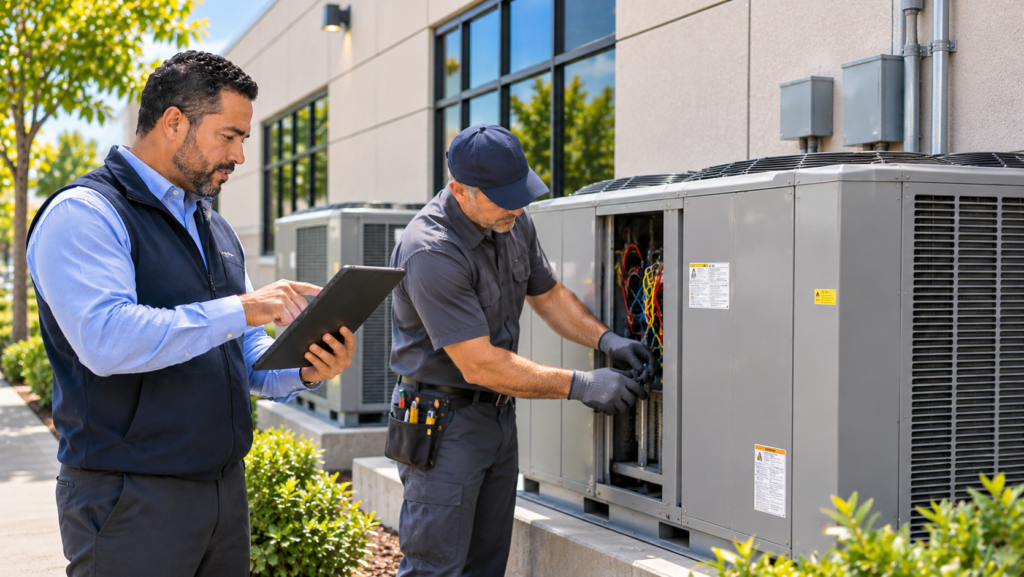
One of the most important responsibilities of a commercial property manager is keeping the building and surrounding grounds in good condition. This involves more than responding when something breaks. It requires routine inspections, preventative maintenance planning, vendor coordination, and attention to conditions that could become more expensive if neglected.
At IPA Commercial, we emphasize diligent oversight of each property’s physical appearance and condition. Our management team coordinates maintenance activities involving building systems, roofing, parking areas, landscaping, lighting, and other shared facilities. By identifying potential concerns early, we help owners address issues before they develop into major repairs or operational disruptions.
A structured commercial property maintenance program can also support better financial planning. Although maintenance needs vary by building, the underlying principle applies across commercial properties: consistent care can reduce avoidable equipment problems and support more predictable operating costs.
Managing Operating Expenses and Vendor Performance
Commercial buildings generate numerous operating expenses, including utilities, repairs, landscaping, cleaning, security, insurance, and contracted services. Without careful monitoring, these expenses can increase gradually, reducing the income available to property owners. A commercial property manager helps maintain financial discipline by reviewing expenditures, coordinating services, and identifying opportunities for greater efficiency.
IPA Commercial Real Estate works with service technicians, consultants, and vendors to coordinate property services and evaluate ongoing operational needs. Our role includes helping owners understand where their money is going, whether services are meeting expectations, and where adjustments may be appropriate. The objective is not simply to minimize spending, but to ensure expenditures contribute to the property’s condition, functionality, and long-term value.
Energy consumption is one area where management decisions can influence expenses. The ENERGY STAR program for commercial buildings provides guidance on benchmarking and improving building energy performance. By evaluating utility usage alongside other operating costs, property managers can identify areas that deserve closer attention without compromising tenant comfort or building operations.
Supporting Tenants and Managing Lease Responsibilities
A commercial property manager also plays an important role in maintaining productive relationships with tenants. Businesses depend on their leased spaces to operate efficiently, and unresolved property concerns can interfere with daily activities. Clear communication, timely responses, and consistent enforcement of lease obligations help create a more stable environment for tenants and owners alike.
At IPA Commercial, we prioritize professional tenant communication and responsive property oversight. Our management team addresses maintenance requests, coordinates access for necessary work, and helps resolve operational concerns. We also monitor responsibilities established in lease agreements, including maintenance obligations, shared-area provisions, and other requirements affecting property operations.
Our management philosophy emphasizes a comprehensive leasing and co-tenancy program. This is especially important in multi-tenant commercial properties, where the needs of individual businesses must be considered alongside the interests of the entire property. Effective commercial leasing and property management helps reduce unnecessary conflicts and supports an environment where tenants can operate successfully.
Providing Financial Reporting and Performance Oversight
Commercial property owners need accurate information to evaluate whether their investments are performing as expected. Rent payments alone do not provide a complete financial picture. Owners must also understand operating costs, outstanding receivables, maintenance expenditures, budget performance, and the relationship between income and expenses.
IPA Commercial Real Estate emphasizes detailed and accurate management reporting as a central part of our services. Our comprehensive property management system supports the organization and tracking of information that owners need to make informed decisions. Regular reporting provides greater visibility into property operations and helps identify financial patterns that might otherwise go unnoticed.
An important consideration is net operating income (NOI), which generally represents property operating income minus operating expenses, before debt service and certain other costs. By monitoring the factors affecting NOI, our team helps owners evaluate financial performance and identify opportunities to strengthen the asset. Accurate reporting also supports budgeting, investment planning, and discussions about future improvements.
Coordinating Leasing, Occupancy, and Long-Term Tenant Retention
Vacant commercial space can create significant financial pressure. Beyond the immediate loss of rental income, owners may face marketing expenses, leasing commissions, tenant improvements, and additional carrying costs. A property manager contributes to occupancy stability by monitoring lease activity, maintaining tenant relationships, and coordinating with leasing professionals when appropriate.
IPA Commercial offers an advantage through our combined experience in property management and commercial brokerage. Our management and leasing capabilities allow us to consider how operational decisions affect marketability and tenant satisfaction. Maintaining attractive common areas, addressing recurring concerns, and understanding tenant needs can contribute to a stronger leasing environment.
Our knowledge of the Inland Empire commercial real estate market also helps us recognize changing business needs and local market conditions. While no management strategy can eliminate vacancies, proactive oversight and communication can improve a property’s competitive position and help owners prepare for upcoming leasing decisions.
Planning Improvements and Protecting Long-Term Property Value
Commercial property management also involves looking beyond immediate operational needs. Buildings age, tenant expectations change, and certain components eventually require replacement. A property manager helps owners distinguish between routine maintenance, necessary capital improvements, and upgrades that may improve a property’s competitiveness.
At IPA Commercial Real Estate, we consider improvements in the context of the owner’s investment objectives. Replacing deteriorating pavement, modernizing common-area lighting, or addressing aging mechanical equipment may protect functionality and tenant satisfaction. However, improvements should also be evaluated against their cost, expected benefits, and relevance to the property’s market.
This approach reflects our broader experience in commercial real estate asset management, facility management, brokerage, and development. We understand that maximizing property value does not always mean spending more. Often, it means making informed decisions about where resources will produce the greatest long-term benefit.
Managing Risk, Safety, and Property Responsibilities
Commercial property owners must also consider conditions that could create safety concerns, operational interruptions, or liability exposure. While legal compliance involves responsibilities shared among owners, tenants, and qualified professionals, property managers play an important coordinating role in identifying concerns and arranging appropriate corrective work.
IPA Commercial’s management team monitors property conditions and works with qualified service providers when repairs or specialized evaluations are needed. Potential concerns may include damaged walkways, inadequate exterior lighting, drainage problems, or deteriorating common areas.
We also recognize that effective risk management depends on documentation and communication. Maintaining service records, tracking reported concerns, and coordinating timely responses helps establish a more organized approach to property operations. These practices support ownership oversight while helping protect the property’s usability and reputation.
Frequently Asked Questions About Commercial Property Management
Commercial property owners often have questions about how management arrangements work and what to expect when partnering with a professional firm. The following considerations can help clarify several practical aspects of the relationship.
Can a commercial property owner remain involved in management decisions?
Absolutely. Professional property management does not require owners to surrender control over important investment decisions. Management agreements can establish spending limits, approval procedures, reporting expectations, and the types of decisions requiring direct owner authorization. At IPA Commercial, we work to understand each client’s preferred level of involvement and provide the information necessary for meaningful oversight.
When should an owner consider hiring a commercial property manager?
There is no universal property size or tenant count that determines when professional management becomes appropriate. Owners may benefit from assistance when operational responsibilities become time-consuming, properties require specialized oversight, or an investment portfolio expands. Owners who live outside the property’s immediate market may also value having an experienced local management team available to coordinate ongoing needs.
How is a commercial property management agreement structured?
Management agreements typically define the services provided, management fees, responsibilities, authorization limits, reporting requirements, and procedures for ending the relationship. The specific terms depend on the property and scope of services. Before entering an agreement, owners should understand which responsibilities are included and whether certain services require additional authorization or compensation.
Can one management company oversee several different commercial properties?
Yes. A professional management company may oversee multiple properties with different uses, tenant arrangements, and operational requirements. However, each asset should receive attention appropriate to its individual needs. IPA Commercial Real Estate works with individual investors, investment groups, corporations, and entities with larger commercial real estate portfolios, providing coordinated oversight while recognizing that every property has distinct objectives.
Why Choose IPA Commercial Real Estate
Successful commercial property ownership requires more than collecting rent and responding to occasional maintenance requests. It requires experienced professionals who understand how building operations, tenant relationships, financial reporting, and long-term investment objectives work together. At IPA Commercial Real Estate, we provide comprehensive commercial property management services designed to protect existing value while identifying opportunities to create additional value.
With 30 years of experience in the Inland Empire commercial real estate market, IPA Commercial Real Estate brings extensive local knowledge and a broad understanding of brokerage, asset management, facility management, and development. Our integrated team of professional property managers, service technicians, consultants, and vendors provides the coordinated support necessary to manage commercial properties effectively. We tailor our approach to each asset rather than relying on a one-size-fits-all management strategy.
Our reputation throughout the Inland Empire is built on ethical business practices, trustworthiness, personalized attention, and long-term client relationships. Whether you own a single commercial property or manage a substantial investment portfolio, our goal is to help you maintain strong property performance, make informed decisions, and maximize the long-term potential of your real estate investments.
If you are looking for experienced commercial property management in the Inland Empire or throughout Southern California, contact IPA Commercial Real Estate to discuss your property’s needs. Call our Property Management team at 951-686-1462, Ext. 7, or reach our Brokerage and Leasing team at 951-686-1462, Ext. 2.